From Brinkmanship to Diplomacy: Deconstructing Iran's Nuclear Ambitions and the Path to 2025 Peace Talks
The saga surrounding Iran's nuclear program has long been a focal point of international concern, oscillating between intense geopolitical tension and tentative diplomatic overtures. This complex narrative, deeply rooted in the pursuit of nuclear capabilities and the international community's efforts to prevent proliferation, recently saw a hypothetical yet dramatic turn. Imagine a scenario where a significant military escalation by the United States, targeting Iran's key nuclear sites, paved the way for an unexpected shift towards peace talks. This article delves into such a hypothetical timeline, exploring the audacious military action, its immediate aftermath, and the subsequent diplomatic push for a nuclear peace agreement in 2025, a critical juncture for US Strikes Obliterate Iran's Nuclear Program: Escalation & Peace?.
Understanding the interplay between military pressure and diplomatic engagement is crucial when analyzing the long-standing question of Iran's nucléaire iran militaire aspirations. This detailed look traces a path from direct confrontation to hopeful negotiation, examining the strategic calculations and the global implications of such monumental events.
The Escalation: US Military Action Against Iran's Nuclear Facilities
In this dramatic hypothetical, the international community witnessed a major escalation in the regional conflict involving Iran and Israel, culminating in direct U.S. military strikes against three of Iran’s most critical nuclear facilities. This unprecedented action, occurring despite previous assurances from a sitting U.S. President about avoiding further Middle East entanglements, signaled a decisive move to dismantle Tehran's nuclear enrichment capacity.
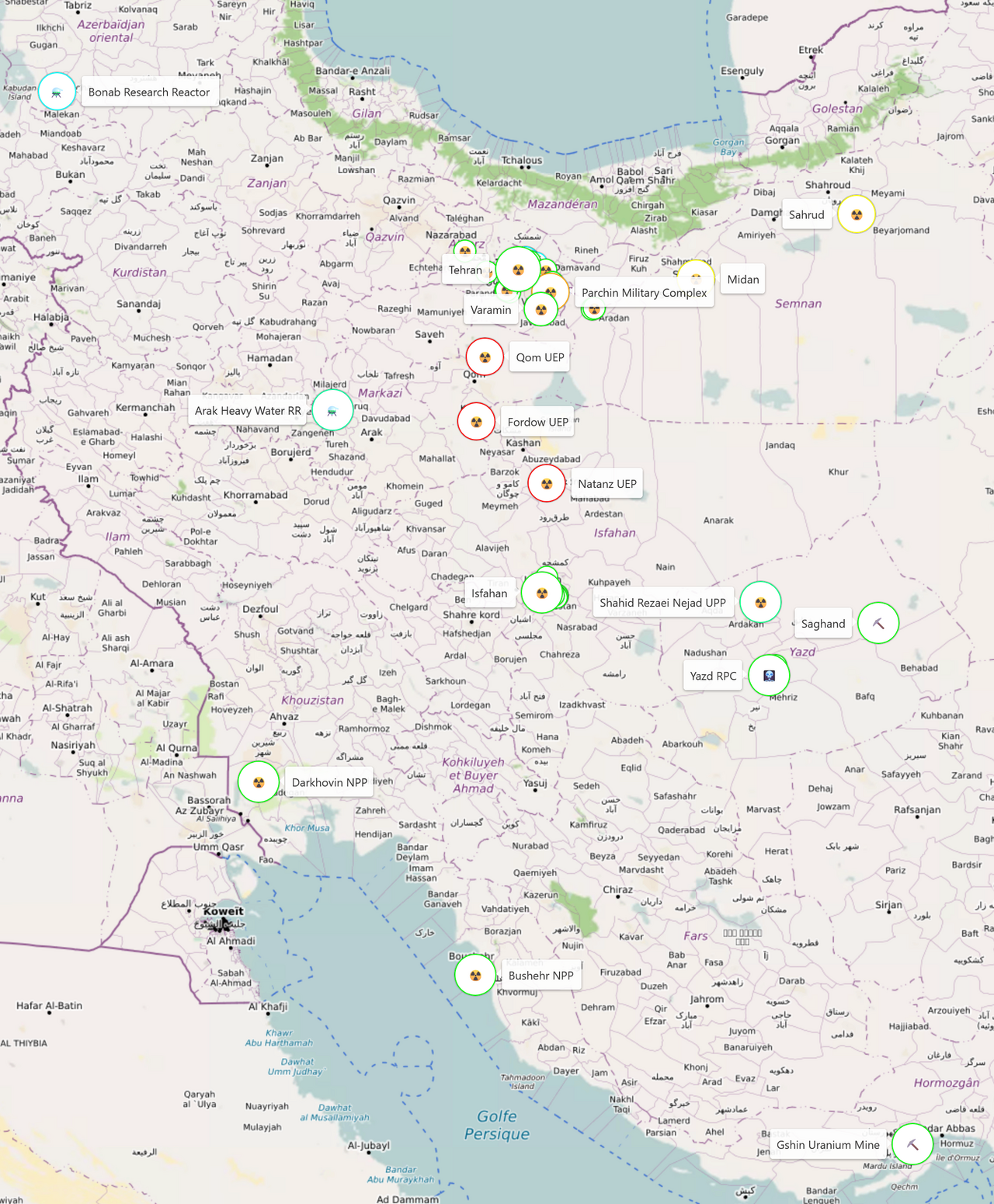
The targets were meticulously chosen: Fordow, Natanz, and Esfahan. President Trump, addressing the nation shortly after the strikes, declared the operation a "spectacular military success," confirming the "complete and total obliteration" of Iran's key enrichment facilities. The Fordow site, notoriously fortified and buried roughly 300 feet under a mountain, posed a unique challenge. Its destruction necessitated the deployment of highly specialized ordnance: the GBU-57 MOP (Massive Ordnance Penetrator), a "bunker buster" bomb weighing an immense 30,000 pounds. This colossal weapon, capable of penetrating hardened underground structures, can only be delivered by the U.S. B-2 stealth bomber, highlighting the advanced military capabilities brought to bear in this operation. For more on the specifics of these capabilities, see Bunker Busters & B-2s: Unpacking the Iran Nuclear Site Strikes.
This bold military engagement, coordinated with Israel, marked the first direct U.S. involvement in the escalating conflict. The objective was clear: to halt Iran’s pursuit of a nuclear weapon and neutralize its capacity to enrich uranium, thereby removing a perceived existential threat. The swift, decisive nature of the strikes aimed to send an unequivocal message regarding the consequences of continued nuclear ambitions.
From Obliteration to the Call for Peace: The Strategic Pivot
Following the declaration of military success, an interesting pivot occurred. President Trump, while praising the "great American Warriors" and asserting the destruction of Iran's nuclear capabilities, also issued a stark call for peace. "NOW IS THE TIME FOR PEACE!" he proclaimed, a seemingly paradoxical statement given the recent aggressive action. This dual message hinted at a strategy of coercive diplomacy: demonstrating overwhelming military power to create a new reality, one where a weakened Iran would be compelled to negotiate on different terms.
Defense Secretary Pete Hegseth further reinforced this narrative, stating that Iran's "nuclear ambitions were obliterated" by the strikes. The implication was that with the primary military objective achieved – the destruction of the physical infrastructure supporting Iran's nucléaire iran militaire program – the path was now open, or perhaps forced, towards a diplomatic resolution. The rhetoric suggested that further military action, though still an option for "other targets," could be avoided if peace came "quickly." This shift from maximum pressure through military force to an immediate demand for peace talks underscored a calculated strategy to reframe the conflict and dictate the terms of any future engagement.
This dramatic turn of events highlights the intricate balance between military intervention and diplomatic objectives. The underlying theory was that by removing Iran's nuclear enrichment capacity, the primary bargaining chip in its international relations, the ground would be set for negotiations from a position of perceived strength by the US.
Diplomacy on the Horizon: The 2025-2026 US-Iran Peace Talks
True to the call for peace, the hypothetical timeline sees the U.S. and Iran embarking on a significant series of peace negotiations in 2025, a mere two years after the impactful military strikes. This diplomatic initiative was reportedly spurred by a letter from President Trump to Iran's Supreme Leader Ali Khamenei, signaling a willingness to engage despite the recent hostilities.
The first round of high-level meetings commenced on April 12, 2025, in Oman, a country with a long-standing reputation as a neutral mediator in Middle Eastern affairs. These crucial discussions were led by U.S. Special Envoy Steve Witkoff and Iranian Foreign Minister Abbas Araghtchi. Initial reports described the talks as "constructive," an encouraging sign that both sides, despite the recent history, were willing to engage in meaningful dialogue.
Following the initial session, a second round of negotiations, again under Omani mediation, took place in Rome on April 19, 2025. These continued indirect discussions between Witkoff and Araghtchi further built on the initial progress. A third high-level meeting in Muscat a week later cemented the ongoing commitment to finding a peaceful resolution. The choice of neutral venues like Oman and the use of indirect talks underscore the sensitivity of the situation and the necessity of carefully managed dialogue to bridge deep-seated mistrust.
These negotiations aimed to achieve a comprehensive nuclear peace agreement, addressing not only the capabilities destroyed but also future limitations and verification mechanisms for Iran's nuclear program. The very occurrence of these talks, despite the preceding military action, suggests a complex geopolitical strategy where force was used as a catalyst for a return to the negotiating table.
Navigating Future Pathways: Insights and Implications
The hypothetical journey from military obliteration to peace talks presents several critical insights into international relations and conflict resolution. Firstly, it highlights the concept of coercive diplomacy, where military action is employed not as an end in itself, but as a means to alter the diplomatic landscape and compel an adversary to negotiate. The success of such a strategy is always debatable, as it risks unpredictable escalation and deeper entrenchment of animosity.
Secondly, the role of mediation by neutral parties, such as Oman, proves invaluable in de-escalating tensions and facilitating dialogue between deeply mistrustful parties. Their ability to provide a safe and discreet environment for indirect talks is often the critical ingredient for moving from confrontation to conversation.
For any future agreement concerning Iran's nucléaire iran militaire program to be sustainable, several practical elements are essential:
- Robust Verification: Any deal must include stringent inspection and verification mechanisms by international bodies like the IAEA to ensure Iran's compliance.
- Clear Red Lines: Defining explicit limits on enrichment levels, centrifuge deployment, and missile development is crucial.
- Phased Sanctions Relief: Linking the lifting of economic sanctions to verifiable steps taken by Iran can incentivize adherence.
- Regional Security Dialogue: Addressing broader regional security concerns, including proxy conflicts and missile proliferation, would foster a more stable environment.
- Building Trust: While difficult, sustained diplomatic engagement can slowly build a modicum of trust, crucial for long-term stability.
The hypothetical scenario described demonstrates that even after severe military action, the door to diplomacy can reopen. However, it also underlines the immense challenges in transforming a military victory into a lasting peace. The discussions in 2025-2026, though "constructive," would face the daunting task of establishing a framework that addresses past grievances, current realities, and future aspirations, all while ensuring regional stability and non-proliferation.
The hypothetical arc from a dramatic U.S. military strike to US-Iran peace talks in 2025 illustrates the volatile yet often interconnected nature of power projection and diplomacy in international relations. While military action can forcefully reshape the immediate strategic environment concerning Iran's nuclear ambitions, it is ultimately patient, persistent, and often indirect diplomacy that lays the groundwork for sustainable peace. The success of the 2025-2026 negotiations, even in this imagined future, would hinge on a delicate balance of reciprocal commitments, robust verification, and a willingness from all parties to look beyond past conflicts towards a future of stability for the region and the world.